Tanzania Safari by Month: Where to Go From January to December
Tanzania offers rewarding safari experiences throughout the year, but the right park changes with the seasons. This guide shows where to focus from January to December for calving, migration, dry-season wildlife, birding and green-season scenery.
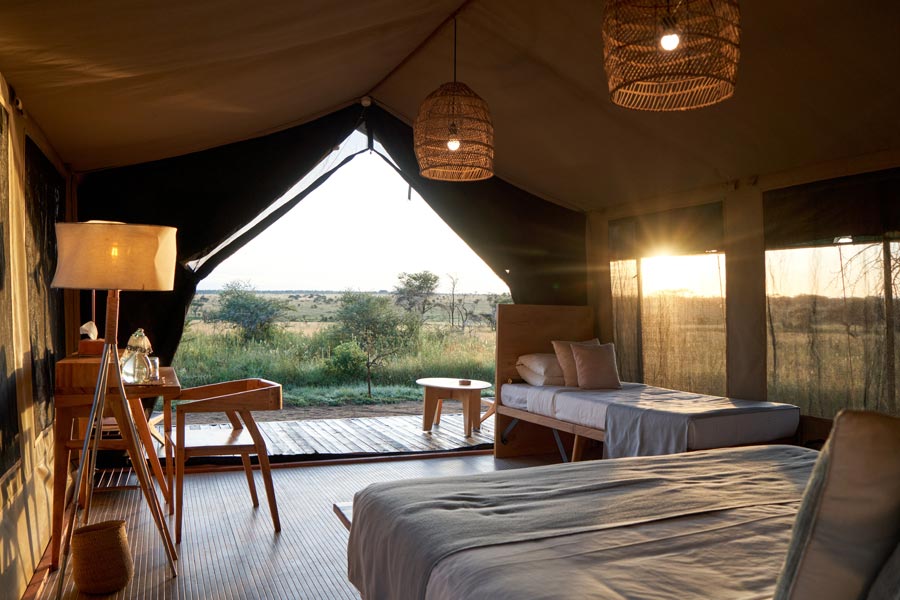
There is no single best month for a Tanzania safari.
The better question is: where should you go in Tanzania during the month you are travelling?
January and February can put you near the wildebeest calving grounds of the southern Serengeti and Ndutu. From roughly April into June, the migration moves through central and western parts of the Serengeti. July to October brings Tanzania's main dry season and the usual northern Serengeti river-crossing window, while Tarangire, Ruaha and Nyerere also become particularly rewarding as wildlife concentrates around dependable water. November and December bring short rains, fresh landscapes, birdlife and the migration's return toward the southern plains.
The important word is usually.
The Great Migration follows rainfall, water, and fresh grazing rather than a fixed calendar. Exact herd positions and river crossings can move earlier or later from one year to another. Wildflip's own current planning guide explicitly warns that migration timing and animal behaviour cannot be guaranteed on a particular date.
This guide therefore treats each month as a planning framework, not a wildlife timetable.
Quick Answer: Where Should You Go on Safari Each Month?
There is no single best month for a Tanzania safari; the right choice depends on the park and experience you want. As a broad planning pattern:
- January–February: Southern Serengeti and Ndutu for the calving cycle.
- March–May: the greener Northern Circuit, with the migration transitioning through central and western Serengeti.
- June–October: the dry season, with the migration moving north and strong wildlife viewing in Tarangire, Ruaha and Nyerere.
- July–October: the main northern Serengeti river-crossing planning window.
- November–December: short rains, birding and green landscapes, with the migration moving south again.
The Great Migration follows rain and fresh grazing rather than a fixed calendar, so month-by-month locations are planning patterns, not guarantees.
| Month | Where to Focus | Main Reason |
|---|---|---|
| January | Southern Serengeti / Ndutu / Ngorongoro | Green plains and developing calving season |
| February | Ndutu / Southern Serengeti / Ngorongoro | Calving and predator-prey activity |
| March | Southern/Central Serengeti / Ngorongoro | Late calving period and transition |
| April | Central Serengeti / Ngorongoro | Long rains, lush scenery, fewer vehicles |
| May | Central/Western Serengeti / Ngorongoro | Herd movement and quieter green season |
| June | Central/Western Serengeti / Tarangire / Ruaha / Nyerere | Start of dry season |
| July | Northern Serengeti / Tarangire / Ngorongoro / Southern Circuit | Dry-season wildlife and crossing possibility |
| August | Northern Serengeti / Tarangire / Ruaha / Nyerere | Peak dry-season conditions |
| September | Northern Serengeti / Tarangire / Ruaha / Nyerere | Strong all-round wildlife viewing |
| October | Northern/Central Serengeti / Tarangire / Ruaha / Nyerere | Late dry-season concentrations |
| November | Central Serengeti / Tarangire / Lake Manyara | Short rains, migration moving south, birding |
| December | Southern Serengeti / Ndutu / Ngorongoro | Returning herds and start of southern cycle |
TANAPA describes June through October as Tanzania's principal dry-season safari window, November–December as the short-rains period, and March–May as the long rains. Because Tanzania has varied microclimates, conditions differ by park and year.
Before Choosing a Month: Understand Tanzania's Safari Seasons
Tanzania's wildlife does not disappear when it rains. What changes is where animals concentrate, how green the landscape is, road conditions, visitor numbers, and which regions are easiest to explore.
Tanzania does not have uniform weather nationwide: microclimates and rainfall vary by region and by year, so treat these periods as broad patterns.
June to October: the long dry season
For many travellers, this is the easiest safari period.
Vegetation generally becomes thinner, water sources become increasingly important, and wildlife can concentrate around rivers, wetlands and permanent water.
This pattern is particularly important in parks such as Tarangire and Ruaha. TANAPA specifically describes dry-season concentrations around the Tarangire River and Great Ruaha River systems.
It is also the broad period associated with the migration reaching northern Serengeti and the Mara River area.
November to December: the short rains
The short rains begin to refresh landscapes after the long dry season.
TANAPA highlights greener scenery, fewer visitors and strong birding as advantages of this period, while noting that some tracks can become muddy.
In the Serengeti ecosystem, the migration generally begins travelling south again as rainfall creates fresh grazing.
January and February: warm green-season safari
January and February sit between the main rainy periods in many northern safari areas.
This is one of the most important wildlife periods in the Serengeti because large migration herds usually gather across the southern Serengeti and Ndutu ecosystem ahead of and during calving.
March to May: the long rains
These months bring greener landscapes and fewer safari vehicles, but also the greatest risk of muddy roads and weather-related access issues.
TANAPA recommends checking road conditions and lodge availability during the long rains.
For the right traveller, however, this is not a season that needs to be automatically rejected.
01Tanzania Safari in January: Southern Serengeti & Ndutu
January is one of the most interesting months for travellers whose priority is the southern Serengeti ecosystem rather than northern river crossings.
The migration herds are generally spread across the short-grass plains in and around Ndutu and the southern Serengeti, depending on rainfall. The landscape is green, the plains are productive, and the calving period is developing.
Wildflip's current Serengeti guidance places the migration broadly in the Southern Serengeti/Ndutu area from December through March.
Where to go in January
Prioritise:
- Ndutu
- Southern Serengeti
- Ngorongoro Conservation Area
- Ngorongoro Crater as part of a wider Northern Circuit itinerary
January works particularly well for travellers who want migration activity without building the entire safari around waiting for a river crossing.
For an itinerary specifically positioned around this part of the ecosystem, Wildflip already has a verified 4-day Serengeti, Ndutu & Ngorongoro migration safari and a longer 7-day Ndutu calving safari.
Plan this month
- Where to focus
- Southern Serengeti / Ndutu / Ngorongoro
- Safari character
- Green plains and developing calving season
- Best for
- Wildlife photographers, returning safari travellers and anyone specifically interested in the migration's southern phase.
02Tanzania Safari in February: Ndutu Calving Season
February is the month most strongly associated with wildebeest calving around Ndutu and the southern Serengeti.
TANAPA's current 2026 Serengeti tourism material identifies late January through March as the calving-season period.
Large numbers of newborn animals naturally create a very different safari from the famous river-crossing experience. Instead of waiting beside a river for a short burst of action, visitors explore open plains where herds, newborns, and predators occupy the same ecosystem.
Where to go in February
Focus your itinerary around:
- Ndutu
- Southern Serengeti
- Ngorongoro Conservation Area
- Ngorongoro Crater
If calving is the main reason for travelling, do not stay only in central or northern Serengeti and expect the same experience. Your camp location matters.
Plan this month
- Where to focus
- Ndutu / Southern Serengeti / Ngorongoro
- Safari character
- Calving and predator-prey activity
- Planning note
- Calving is natural behaviour, so no operator can guarantee a birth, hunt or particular wildlife encounter.
- Best for
- Calving-season travellers, photographers and visitors interested in big-cat behaviour.
03Tanzania Safari in March: Southern to Central Serengeti
March is a transition month.
Early in the month, significant migration activity can remain around the southern plains. As rainfall patterns change, the herds begin spreading and moving northwards.
At the same time, Tanzania enters the long-rains period. Landscapes become increasingly green, and visitor numbers can begin to fall.
Where to go in March
Good options include:
- Southern Serengeti early in the month
- Central Serengeti
- Ngorongoro Conservation Area
- Ngorongoro Crater
March can be attractive for photographers who value fresh landscapes and dramatic skies more than consistently dry conditions.
It is also a month where itinerary flexibility becomes particularly useful. The migration should never be treated as though it crosses a geographic boundary on the first day of a new month.
Plan this month
- Where to focus
- Southern/Central Serengeti / Ngorongoro
- Safari character
- Late calving period and transition
- Best for
- Photographers, travellers comfortable with variable weather, and visitors looking for the migration transition rather than one headline event.
04Tanzania Safari in April: Central Serengeti & Ngorongoro
April normally falls within Tanzania's long rains and is one of the wettest periods of the safari calendar.
That means this is not the easiest month for every traveller.
Roads can become muddy, certain tracks can be challenging, and accommodation availability should be checked carefully. TANAPA specifically recommends checking road and lodge conditions during the March–May long rains.
But April also provides something that peak dry-season visitors do not get: intensely green landscapes and significantly quieter safari areas.
Where to go in April
For a Northern Circuit safari, consider:
- Central Serengeti
- Ngorongoro Crater
- Ngorongoro highlands
- selected accessible areas based on current conditions
Wildflip's current Serengeti calendar places the migration broadly through central and western Serengeti from April into June, while emphasising that rainfall changes the exact timing.
April should be chosen because you appreciate the green season, not because you expect dry-season conditions at a lower price.
Plan this month
- Where to focus
- Central Serengeti / Ngorongoro
- Safari character
- Long rains, lush scenery, fewer vehicles
- Best for
- Repeat safari travellers, landscape photographers and people comfortable trading predictable weather for quieter parks.
05Tanzania Safari in May: Central & Western Serengeti
May remains part of the long-rains period, although conditions can begin changing toward the end of the month.
Migration herds are generally moving northwest through the Serengeti ecosystem rather than remaining concentrated in Ndutu.
Where to go in May
Consider:
- Central Serengeti
- Western Serengeti where current herd reports support it
- Ngorongoro
- selected Northern Circuit combinations
The biggest mistake in May is choosing accommodation according to a generic annual migration map without checking the current year's rainfall and herd movement.
Wildflip's broader Tanzania guide correctly describes migration movement as a continuous process influenced by rain and fresh grazing rather than fixed monthly dates.
Plan this month
- Where to focus
- Central/Western Serengeti / Ngorongoro
- Safari character
- Herd movement and quieter green season
- Best for
- Travellers prioritising fewer vehicles, green landscapes and flexible itineraries.
06Tanzania Safari in June: Serengeti Movement & the Start of the Dry Season
June is one of the most useful transition months in Tanzania.
The long dry season begins, roads generally improve, and wildlife in several parks starts becoming increasingly dependent on permanent water.
In the Serengeti, migration herds are moving through the central/western ecosystem and continuing north. Exact positions vary considerably from year to year.
Where to go in June
Depending on your priorities:
- Central or Western Serengeti for migration movement
- Ngorongoro for reliable resident wildlife
- Tarangire as dry-season conditions develop
- Ruaha
- Nyerere
- Mikumi as part of a Southern Circuit itinerary
Ruaha's official season is broadly dry from June to October, while Nyerere's dry season begins in June and extends toward November.
June can therefore be an excellent month for travellers who want good safari conditions but do not need their entire trip to revolve around the busiest northern river-crossing period.
Plan this month
- Where to focus
- Central/Western Serengeti / Tarangire / Ruaha / Nyerere
- Safari character
- Start of dry season
- Best for
- First-time visitors, Northern Circuit + Southern Circuit planners and travellers wanting the start of classic dry-season conditions.
07Tanzania Safari in July: Northern Serengeti, Tarangire & Southern Tanzania
By July, dry-season safari conditions are established across much of Tanzania.
Wildlife viewing becomes increasingly productive around permanent water sources, and the Great Migration is generally moving into or through northern Serengeti.
River crossings become possible, but this distinction matters:
Being in northern Serengeti during crossing season does not mean you will see a crossing.
Wildflip states that crossings depend on timing and herd behaviour, and its migration itineraries are designed to allow guides to respond to current conditions rather than promise a particular event.
Where to go in July
Strong choices include:
- Northern Serengeti
- Ngorongoro
- Tarangire
- Ruaha
- Nyerere
Tarangire becomes increasingly compelling because its river and swamps function as important dry-season water sources. TANAPA identifies June–October as the park's main dry season and recommends booking for this peak period.
For travellers prioritising the migration, see Wildflip's 9-day wildebeest migration and river-crossing itinerary.
Plan this month
- Where to focus
- Northern Serengeti / Tarangire / Ngorongoro / Southern Circuit
- Safari character
- Dry-season wildlife and crossing possibility
- Best for
- First-time safari travellers, families travelling during summer holidays and visitors who want to combine migration tracking with classic dry-season game viewing.
08Tanzania Safari in August: Northern Serengeti & Peak Dry-Season Wildlife
August sits firmly in Tanzania's long dry season.
This makes it a strong month not only for the Serengeti but for several different ecosystems.
Where to go in August
For migration-focused travel:
- Northern Serengeti
- Mara River area
For classic dry-season wildlife:
- Tarangire
- Ngorongoro
- Ruaha
- Nyerere
Ruaha is especially interesting at this time because dry-season wildlife concentrates around the Great Ruaha River and remaining water sources. TANAPA highlights dry-season gatherings of elephants and buffalo along the river systems.
In Nyerere, the Rufiji River and connected wetlands add another dimension: game drives can be combined with authorised boat safaris where available.
August is popular for good reason, but it is not automatically superior to every other month. Travellers who dislike peak-season demand may prefer June, September or another season entirely depending on their priorities.
Plan this month
- Where to focus
- Northern Serengeti / Tarangire / Ruaha / Nyerere
- Safari character
- Peak dry-season conditions
- Best for
- First-time Tanzania visitors, river-crossing-focused itineraries and travellers wanting reliable dry-season conditions.
09Tanzania Safari in September: Excellent All-Round Safari Conditions
September is one of Tanzania's strongest all-round safari months.
Northern Serengeti can still offer migration and river-crossing opportunities, while Tarangire and Southern Circuit parks remain deep in their dry-season wildlife patterns.
Where to go in September
Consider:
- Northern Serengeti
- Ngorongoro
- Tarangire
- Ruaha
- Nyerere
- Mikumi as part of a Southern Circuit route
If your main objective is a diverse wildlife safari rather than a single migration event, September gives considerable flexibility.
You can build a classic Northern Circuit itinerary around Serengeti, Ngorongoro and Tarangire, or move south for a combination involving Nyerere, Mikumi and Ruaha.
Wildflip already offers both Northern and Southern itineraries through its Tanzania safari collection.
Plan this month
- Where to focus
- Northern Serengeti / Tarangire / Ruaha / Nyerere
- Safari character
- Strong all-round wildlife viewing
- Best for
- First-time safari travellers, photographers, Northern Circuit trips and Southern Circuit wildlife-focused itineraries.
10Tanzania Safari in October: Late Dry Season
October is the closing phase of the long dry season.
Water-dependent wildlife can still be strongly concentrated, particularly in places such as Tarangire and Ruaha.
In the Serengeti, migration movement becomes increasingly transitional. Some herds may remain in northern areas while others begin responding to changing rain patterns and moving southwards.
Where to go in October
Strong options include:
- Northern or Central Serengeti depending on current herd positions
- Tarangire
- Ngorongoro
- Ruaha
- Nyerere
This is precisely why a month-by-month migration chart should never be used as a GPS tracker.
If your priority is the Great Migration, ask where the herds have actually been moving recently rather than booking a camp solely because it is labelled "Serengeti".
Plan this month
- Where to focus
- Northern/Central Serengeti / Tarangire / Ruaha / Nyerere
- Safari character
- Late dry-season concentrations
- Best for
- Travellers wanting late dry-season wildlife, migration flexibility and strong combinations across multiple parks.
11Tanzania Safari in November: Short Rains, Birding & Returning Herds
November changes the appearance of Tanzania quickly when the short rains arrive.
The dusty dry-season landscape starts becoming green again. Migratory birds add activity, and wildlife begins spreading as water becomes more widely available.
TANAPA specifically identifies November–December as a greener period with fewer crowds and good birding, while warning that some tracks may become muddy.
Where to go in November
Consider:
- Central Serengeti
- areas south of central Serengeti according to current migration reports
- Tarangire
- Lake Manyara
- Ngorongoro
The Great Migration generally begins moving south again during the short rains, but its location may be more dispersed than during the concentrated calving or northern crossing periods.
Tarangire also changes character. Wildflip's current park guide describes November–December as a period of fresh green scenery, fewer visitors and strong birding.
Plan this month
- Where to focus
- Central Serengeti / Tarangire / Lake Manyara
- Safari character
- Short rains, migration moving south, birding
- Best for
- Birdwatchers, photographers, repeat safari travellers and people who prefer greener landscapes over classic dry-season scenery.
12Tanzania Safari in December: Southern Serengeti & the Return to Ndutu
By December, the migration cycle is turning toward the southern Serengeti and Ndutu plains again as fresh grazing develops.
This does not mean every herd is already concentrated in one place or that peak calving has started.
Instead, December is better understood as the beginning of the southern-plains phase.
Where to go in December
Consider:
- Southern Serengeti
- Ndutu
- Ngorongoro Conservation Area
- Ngorongoro Crater
Wildflip's Serengeti guide places the broad southern migration phase from December through March, with the exact timing changing according to rainfall.
December can therefore be a strong choice if you want green scenery and migration activity but are not specifically dependent on seeing newborn calves.
Plan this month
- Where to focus
- Southern Serengeti / Ndutu / Ngorongoro
- Safari character
- Returning herds and start of southern cycle
- Best for
- Festive-season travellers, families and visitors interested in the early southern migration phase.
Where Is the Great Migration Each Month?
Think of the migration as a moving ecosystem rather than a scheduled event.
| Period | Typical Migration Area | Main Experience |
|---|---|---|
| December–March | Southern Serengeti / Ndutu | Green plains and calving cycle |
| April–June | Central and Western Serengeti | Herds moving northwest |
| July–October | Northern Serengeti | Mara River crossing planning window |
| November | Moving through central/southern ecosystem | Return toward southern plains |
Exact timing changes with rainfall. The migration does not follow fixed calendar dates.
Wildflip uses this same regional framework on its current Serengeti page and explicitly notes that rainfall shifts the timing every year.
A river crossing is therefore something you plan for the possibility of seeing, not something anyone can honestly schedule for 10:30 a.m. on a particular date.
Which Month Should You Choose for Your Main Safari Goal?
| Your Priority | Planning Window | Where to Focus |
|---|---|---|
| Wildebeest calving | Late January–March | Ndutu / Southern Serengeti |
| Mara River crossing opportunity | Roughly July–October | Northern Serengeti |
| Classic dry-season wildlife | June–October | Serengeti / Tarangire / Ngorongoro / Ruaha / Nyerere |
| Tarangire dry-season concentrations | June–October | Tarangire |
| Southern Circuit wildlife | June–October | Ruaha / Nyerere / Mikumi |
| Green landscapes | March–May and short-rains period | Appropriate accessible parks |
| Birding and fresh scenery | Especially short rains / green season | Tarangire / Lake Manyara and suitable habitats |
| Year-round Northern Circuit anchor | Year-round | Ngorongoro |
These windows are useful for planning, not guarantees of wildlife behaviour.
Which Months Are Best for Tarangire?
For classic concentrated wildlife around the Tarangire River, June through October is the key period.
TANAPA states that Tarangire's dry season runs from June through October, with January–February also relatively dry, and describes its river and wetlands as important dry-season wildlife lifelines.
That does not make the remaining months worthless.
November and December bring renewed greenery and birdlife, while January–March can offer attractive landscapes and general wildlife viewing.
Explore Wildflip's Tarangire National Park safari guide for park-specific planning.
Is Ngorongoro Good All Year?
Ngorongoro is one of the easiest Tanzania destinations to include across different months because much of its wildlife is resident rather than dependent on the Great Migration passing through.
Wildflip's current season guide describes Ngorongoro as reliable throughout the year, while the wider conservation area also includes parts of the short-grass plains used seasonally by migratory herds.
That makes it particularly useful in mixed itineraries: your Serengeti region can move according to the season while Ngorongoro remains a logical addition.
When Should You Visit Ruaha?
Ruaha becomes particularly compelling in the June–October dry season.
TANAPA identifies June–October as Ruaha's dry period and describes major dry-season concentrations of elephants and buffalo around the Great Ruaha and other river systems.
This makes Ruaha an important alternative to focusing entirely on Tanzania's Northern Circuit during the dry months.
Its attraction is not the Great Migration. The appeal is a very different wilderness system built around riverine wildlife, predators, and extensive landscapes.
See Wildflip's Ruaha National Park safari guide.
When Should You Visit Nyerere?
Nyerere also becomes particularly practical in the dry season.
TANAPA's park material places the main dry period from approximately June through November, while noting that December–February can still be green, attractive, and accessible in many areas.
The Rufiji River gives Nyerere a character completely different from the Serengeti. Boat safaris can complement standard vehicle-based wildlife viewing, while river channels and oxbow lakes support hippos, crocodiles, elephants and extensive birdlife.
Explore Wildflip's Nyerere National Park safari guide.
Travellers with enough time can also consider Wildflip's verified 12-day Southern Tanzania itinerary.
Northern Circuit or Southern Circuit: Does the Month Matter?
Yes.
The Northern Circuit and Southern Circuit do not always reach their seasonal strengths at the same time.
Northern Circuit
The Northern Circuit includes destinations such as:
- Serengeti
- Ngorongoro
- Tarangire
- Lake Manyara
Its biggest seasonal feature is the Great Migration moving through different parts of the Serengeti ecosystem.
A Northern Circuit safari can work throughout the year, but the specific Serengeti region becomes very important if migration is one of your goals.
Southern Circuit
Key Southern Tanzania destinations include:
- Nyerere
- Ruaha
- Mikumi
- Udzungwa for a different forest/hiking experience
The dry season is especially attractive for wildlife-focused travel in Ruaha and Nyerere because animals become more dependent on permanent rivers and remaining water.
Wet-season road and river conditions require more careful planning in the south, so current local conditions matter.
Is Tanzania Worth Visiting During the Rainy Season?
Yes, for the right traveller.
The word rainy does not mean every safari day consists of continuous rain.
But you should accept genuine trade-offs:
- some tracks can become muddy;
- travel can take longer;
- certain seasonal camps or lodges may close;
- wildlife can be more dispersed because water is widely available; and
- weather can affect access.
In return, green-season travellers can experience lush landscapes, strong birdlife, dramatic skies and fewer vehicles in many locations. TANAPA specifically notes these advantages while advising travellers to check road and lodge conditions.
April and May should therefore not be marketed as secretly "better" than the dry season. They are simply different.
What If Your Dates Are Fixed?
If your travel dates cannot change, do not start by asking whether your month is "good" or "bad".
Start by asking:
Which Tanzanian ecosystem is strongest for what I want to experience during those dates?
For example:
- February → build around Ndutu rather than northern Serengeti.
- August → northern Serengeti makes sense for migration-focused travel.
- September → consider either the Northern Circuit or a strong Southern Circuit safari.
- November → focus less on guaranteed migration drama and more on fresh landscapes, birding and current herd movements.
- April → build an itinerary around accessible areas instead of copying a July route.
This approach is much more useful than applying one universal "best time to visit Tanzania" label to the whole country.
Wildflip's Tanzania safari packages can be adapted around different dates and safari priorities.
Frequently Asked Questions About Tanzania Safari Months
There is no single best month for every traveller. June–October generally offers the easiest classic dry-season game viewing, January–February is especially important for the southern Serengeti calving period, and November–December suits travellers interested in greener scenery and birdlife. The right month depends on the park and wildlife experience you want.
Plan the Safari Around Your Month, Not the Other Way Around
Tanzania does not have one safari season.
It has different ecosystems reaching their strongest seasonal moments at different times.
Go south to Ndutu for the early-year calving cycle. Follow the migration through the Serengeti as the seasons change. Look north during the main July–October river-crossing period. Consider Tarangire, Ruaha and Nyerere when dry-season water sources concentrate wildlife. And do not automatically dismiss November, December or the green season if birding, photography and quieter landscapes matter to you.
Most importantly, do not treat a migration calendar as a guarantee.
Plan around the broad ecological pattern, then use current local conditions to fine-tune the route.
Explore Wildflip's Tanzania safari itineraries or request a tailor-made Tanzania safari based on your month, interests, and preferred pace.
Plan Your Tanzania Safari Around Your Travel Month
The right Tanzania safari depends on more than choosing a famous park. Your travel month affects where the migration is likely to be, which water sources attract wildlife, and which circuit offers the experience you want. Wildflip can build the route around your dates rather than forcing your dates into a fixed itinerary.