Wild Flip SafarisWild Flip Safaris
Where the Great Migration thunders across endless plains and big cats rule the golden grass. Plan your tailor-made Serengeti adventure with a local Tanzanian team.
The Serengeti is the park every safari dreamer pictures, with endless golden plains, acacia trees against a vast sky, and wildlife as far as the eye can see. Its name comes from the Maasai word “Siringet”, meaning the place where the land runs on forever.
This is the beating heart of the Great Migration, home to the densest population of big cats in Africa and superb game viewing in every season. Whether you come for thundering wildebeest, a leopard draped over a branch, or simply the silence of the plains at dawn, the Serengeti delivers.
At Wild Flip Safaris, we're a local team based in Arusha who design custom Serengeti safaris around your dates, budget and travel style, while handling everything from park fees and 4x4 vehicles to expert guides and lodges.
There's a reason the Serengeti tops almost every Africa bucket list. Here's what makes it unforgettable:
| Location | Northern Tanzania, bordering the Ngorongoro Conservation Area and Kenya's Maasai Mara |
| Best Known For | The Great Wildebeest Migration, big cats and classic open savannah |
| Safari Style | 4x4 game drives, hot-air balloon safaris, photographic and migration safaris |
| Best Starting Point | Arusha, either by road via the northern circuit or by light aircraft to a Serengeti airstrip |
| Recommended Stay | 2 - 4 nights inside the park (more to follow the migration) |
| Best Combined With | Ngorongoro Crater, Tarangire, Lake Manyara and a Zanzibar beach extension |
| Ideal Traveller | First-timers, wildlife lovers, photographers, honeymooners, families and luxury travellers |
Few places on Earth hold this much life. During a typical few days, you can expect to see the Big Five alongside huge plains herds. The Serengeti is especially famous for its big cats, with some of the highest densities of lions, cheetahs and leopards anywhere in Africa.
Every year, more than two million wildebeest, zebra and gazelle move in a giant clockwise loop through the Serengeti ecosystem, chasing fresh grass and rain. They are followed closely by lions, cheetahs, leopards and crocodiles, making this one of the most dramatic wildlife events anywhere. The herds spend most of the year inside the Serengeti, so with the right timing and the right camp, you can be right in the middle of it.
| Season | Where the Herds Are | What's Happening |
|---|---|---|
| Dec – Mar | Southern Serengeti / Ndutu | Calving season, with thousands of newborns and intense predator action |
| Apr – Jun | Central & Western Serengeti | The herds move and gather, building toward the rut and the long trek north |
| Jul – Oct | Northern Serengeti | Dramatic Mara River crossings create the most iconic scenes of the migration |
| Nov | Heading back toward central / southern plains | Herds drift south again as the short rains begin |
Please note: the migration follows the rains, so exact timing shifts a little every year. We track the herds throughout the season and position your safari in the right region for your travel dates.
The Serengeti is a year-round destination, and the best time simply depends on what you most want to see.
| Season | Conditions | Best For |
|---|---|---|
| Jun – Oct | Dry season, sparse vegetation, easy sightings | Peak game viewing, big cats and the northern Mara River crossings |
| Dec – Mar | Green season in the south, warm and scenic | Calving season in Ndutu, newborns and predator drama |
| Apr – May | Long rains, lush landscapes, fewer crowds | Photography, lower prices and quieter plains |
| Nov | Short rains, fresh green growth | Good value, returning herds and excellent birding |
Not sure which season fits your trip? Tell us your travel dates and we'll recommend the ideal region and camps. Ask our team →
Classic morning and afternoon drives in an open-roof 4x4 with an expert guide tracking lions, leopards and the herds.
Position yourself in the right region for the season, from Ndutu's calving plains to the Mara River crossings.
Focus your trip on the Serengeti's lions, cheetahs and leopards, which are among the densest populations in Africa.
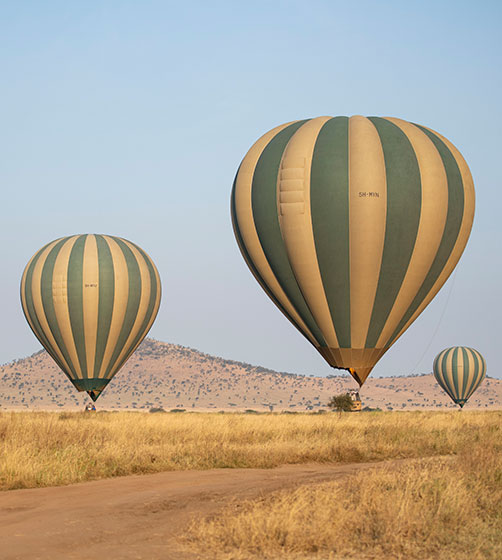
Float over the plains at sunrise, then land for a champagne bush breakfast, creating a true bucket-list moment.
Golden light, open vistas and dramatic action make the Serengeti a paradise for wildlife photographers.
Pair your safari with a Maasai village visit or a Hadzabe bushmen experience near the park boundaries.
Almost every Serengeti safari begins in Arusha, northern Tanzania's safari capital. From there you can travel overland through the northern circuit or fly in by light aircraft.
A scenic drive through the heart of the northern circuit, with wildlife stops along the way:
Ideal if you want to combine several parks into one seamless safari.
Short scenic flights from Arusha land you in the park in around an hour. Common airstrips include:
Perfect for saving time or reaching the migration quickly.
Wild Flip Safaris can arrange your airport pickup, transfers, domestic flights, accommodation, park fees and professional guides, ensuring your whole trip is handled from beginning to end.
Starting points can be shaped to your dates and budget, and every trip is fully customisable.
A focused fly-in or short overland trip to the central Serengeti plains, packed with game drives.
The classic combination of the Serengeti plains and a full day descending into the Ngorongoro Crater.
Built around the herds, with more nights inside the park to track the migration and big cats.
The full circuit through Tarangire, Lake Manyara, Serengeti and Ngorongoro at a relaxed pace.
From simple campsites to world-class luxury, there's a stay for every budget.
Comfortable and great value, close to the action.
The ideal balance of comfort, character and convenience.
Exclusive design, fine dining and unforgettable views.
A quick tip for a migration safari, where you stay matters as much as when because your camp should sit in the region where the herds are located during your dates. We handle this for you.
A simple checklist to keep you comfortable on game drives and cool early mornings.
In short, almost everyone. The Serengeti suits a remarkable range of travellers.
We're a local Tanzanian team that lives and breathes the Serengeti. Here's what you can count on.
Arusha-based specialists with first-hand knowledge of the park and the migration.
Every itinerary is built around your dates, budget and travel style, never off the shelf.
Experienced, English-speaking driver-guides with a sharp eye for wildlife.
Comfortable open-roof Land Cruisers built for game viewing and photography.
Airport pickup, transfers, domestic flights, accommodation and park fees are all arranged.
Receive quick, friendly replies before and during your trip. We're only a message away.
Most travellers spend two to three nights in the Serengeti. A 3-day trip captures the central plains, while 4 - 5 days lets you follow the migration and combine the park with Ngorongoro for a fuller experience.
Yes, and most people do. The Serengeti and Ngorongoro Crater sit side by side on the northern circuit, so they're almost always combined on the same itinerary.
Absolutely. Its open plains and dense wildlife make sightings easy and reliable, which is exactly why it's one of the best parks in Africa for a first safari.
Lions, leopards, cheetahs, elephants, buffalo, giraffes, zebras, wildebeest, hyenas, hippos, crocodiles, gazelles and over 500 bird species. The park is especially famous for its big cats.
It's the very heart of it. The herds spend most of the year inside the Serengeti, and the famous Mara River crossings happen in the north between July and October.
Yes. Light aircraft connect Arusha to airstrips such as Seronera, Kogatende, Grumeti and Ndutu, so you can fly in and out instead of driving the full route.
Tell us a little about your trip, and our team will reply with a tailored quote, usually within 24 hours.
Send us your travel dates, number of travellers, accommodation preferences and budget, and we'll craft the perfect Serengeti safari just for you.
Recognized by leading travel and review platforms for delivering exceptional experiences and trusted service.